Importing porcelain from Asia after the 79% duty: 10 countries compared
Since 7 February 2026, porcelain and ceramic tableware made in China pays an anti-dumping duty of 79% on entry into the EU, on top of the regular customs duty. For importers, the supplier map changed overnight. This guide shows which countries remain competitive, what the numbers say and how to calculate the real landed cost in the EU.
Porcelain, stoneware or earthenware: customs cares about the difference
The trade name does not decide the duty. The material does.
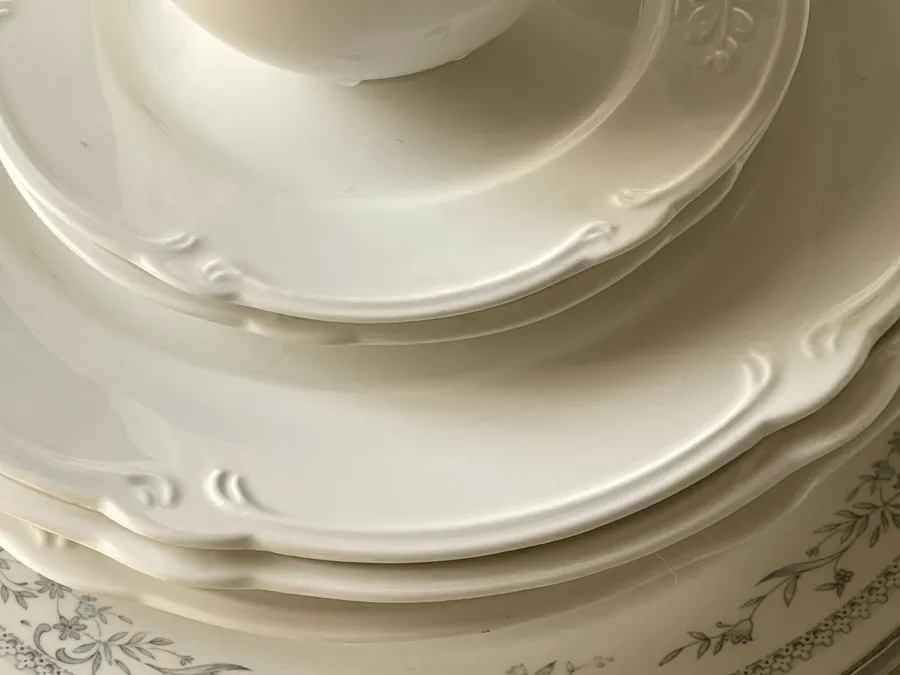
- Porcelain is fully vitrified ceramic, with water absorption below 0.5%. It is classified under tariff heading 6911.
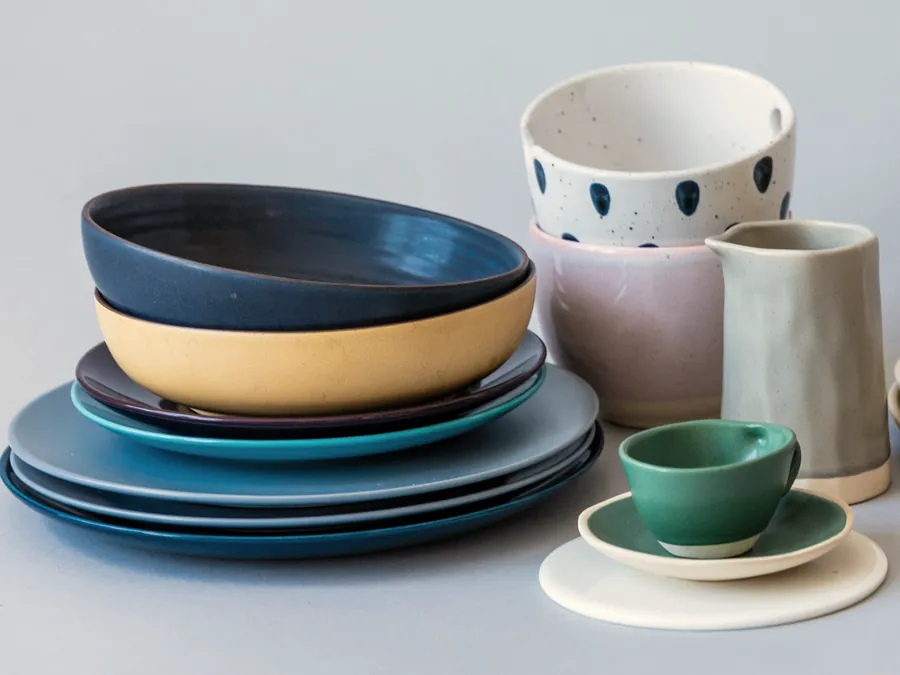
- Stoneware and earthenware absorb more water. They are classified under heading 6912.
- Bone china is porcelain with calcined bone ash in its body. It is whiter, more translucent and lighter.
- Opal glass looks like porcelain, but it is glass and is classified in Chapter 70. The anti-dumping duty on Chinese ceramics does not apply to it.
For correct classification, ask the supplier for the water absorption test result. A wrong code means a wrong duty and, at a later audit, back payments with penalties.
Who exports porcelain: the 2024 figures
Globally, China dominates the category “tableware and kitchenware of porcelain” (HS 691110). In 2024 it exported USD 6.44 billion, close to 2.2 million tonnes. Among the other Asian countries, the largest exporters were Japan (USD 97.5 million), Thailand (65.3 million), Indonesia (55.3 million), India and Sri Lanka (about 19 million each) and Malaysia (13 million).
Vietnam and Bangladesh do not appear in this ranking because they did not report their 2024 data. EU import data completes the picture.
Where the EU actually buys
In 2024, the EU imported USD 628 million of porcelain tableware. The main origins:
| Origin | Value (USD m) | Share of value | Average price (USD/kg) |
|---|---|---|---|
| China | 417.1 | 66% | 2.45 |
| Türkiye | 64.2 | 10% | 4.21 |
| Thailand | 26.0 | 4.1% | 7.27 |
| Bangladesh | 23.8 | 3.8% | 4.35 |
| Indonesia | 9.6 | 1.5% | 6.34 |
| Japan | 9.3 | 1.5% | 9.22 |
| India | 6.3 | 1.0% | 5.91 |
| Vietnam | 2.7 | 0.4% | 2.77 |
| Sri Lanka | 1.6 | 0.2% | 5.49 |
Source: UN Comtrade, via WITS (World Bank), HS 691110, 2024. The average price is calculated from value and quantity.
China supplied 80% of the volume. The average price per kilogram also shows each country's segment. Vietnam competes head-on with China on volume and price. Bangladesh and India cover the middle segment. Thailand and Japan sell higher-priced tableware for HoReCa and premium.
The figures are from 2024, before the 79% duty. That is why the ranking below does not copy the statistics. It shows where purchasing logically moves.
Our ranking: 10 countries for an importer in Romania
| Country | When we choose it | EU import regime |
|---|---|---|
| 1. Vietnam | the direct alternative to China: similar price, quality, design | EU–Vietnam free trade agreement: 0% on porcelain since 2025, with proof of origin |
| 2. India | design, decoration, flexible production | Standard customs duty: GSP preferences for ceramics are suspended for 2026–2028. The EU–India agreement, concluded in 2026, is not yet in force |
| 3. Bangladesh | bone china, export tableware | Duty-free (“Everything But Arms”), guaranteed until November 2029 |
| 4. Thailand | hotelware, HoReCa | Standard customs duty |
| 5. China | very large volume, any design | Standard customs duty plus a 79% anti-dumping duty |
| 6. Indonesia | HoReCa, retail, design | GSP preferences until 31.12.2026, then the standard duty until the EU–Indonesia agreement enters into force |
| 7. Sri Lanka | quality porcelain for export | GSP+ arrangement, with proof of origin |
| 8. Malaysia | industrial production, HoReCa | Standard customs duty |
| 9. Japan | premium segment, design | EU–Japan Economic Partnership Agreement |
| 10. South Korea | design and quality | EU–Korea free trade agreement |
The ranking reflects Best Practices' assessment. The exact rate is confirmed for each product, on its customs code and country of origin, before ordering.
The real landed cost: an example
Take a porcelain order worth €10,000 CIF, meaning including freight and insurance to the EU border:
| Origin | Customs duty | Anti-dumping | Cost before VAT |
|---|---|---|---|
| China | €1,200 (12%) | €7,900 (79%) | €19,100 |
| India, Thailand, Malaysia | €1,200 (12%) | — | €11,200 |
| Vietnam, Bangladesh | €0 | — | €10,000 |
12% is the standard customs duty on code 6911 10 00. For Vietnam, the duty reached 0% in 2025 through the phase-out set by the agreement, and applies only with proof of origin. Rates are reconfirmed for every order.
The anti-dumping duty is calculated on the same basis as the customs duty, the net price at the EU border, and is added to it. Import VAT is deductible, but it is calculated on a value that includes the duties. For goods from China, that also means more cash tied up until the deduction.
Real origin: where the risks are
Only genuine manufacturing in another country legally avoids the duty on China. Chinese goods routed through a third country, relabelled or superficially finished there, are circumvention. It is penalised, including by applying the duty retroactively. The EU watches these routes: on the porcelain code, TARIC also carries an anti-dumping surveillance measure for imports from Türkiye.
A tariff preference only applies with the proof of origin required by each agreement or arrangement. Without it, the standard duty is due. That is why we check the factory, its real capacity and the origin documents before ordering.
Food contact
Porcelain tableware falls under Regulation (EC) No 1935/2004 and Directive 84/500/EEC. The directive sets limits for lead and cadmium and requires a declaration of compliance. The Netherlands has applied stricter limits since 29 May 2026, which matters if you also resell there. Details on the Sourcing and logistics page.
What we do
We compare suppliers from several countries on landed cost in the EU, not just on the factory price. We check the factory and the origin, obtain the declaration of compliance and coordinate tests at accredited laboratories. We organise transport to your address, and customs clearance is handled by our partner broker.
Looking for a porcelain supplier? Send us the product, the estimated quantity and the segment. We come back with options by country and the landed cost in the EU.