8 documents needed for a non-EU import
In brief
- Eight documents accompany an import from outside the EU; a missing one can block the goods at customs.
- The person lodging the declaration is responsible for the accuracy of the data and the authenticity of the documents.
- The duty depends on the customs code and the origin of the goods, so check both before ordering.
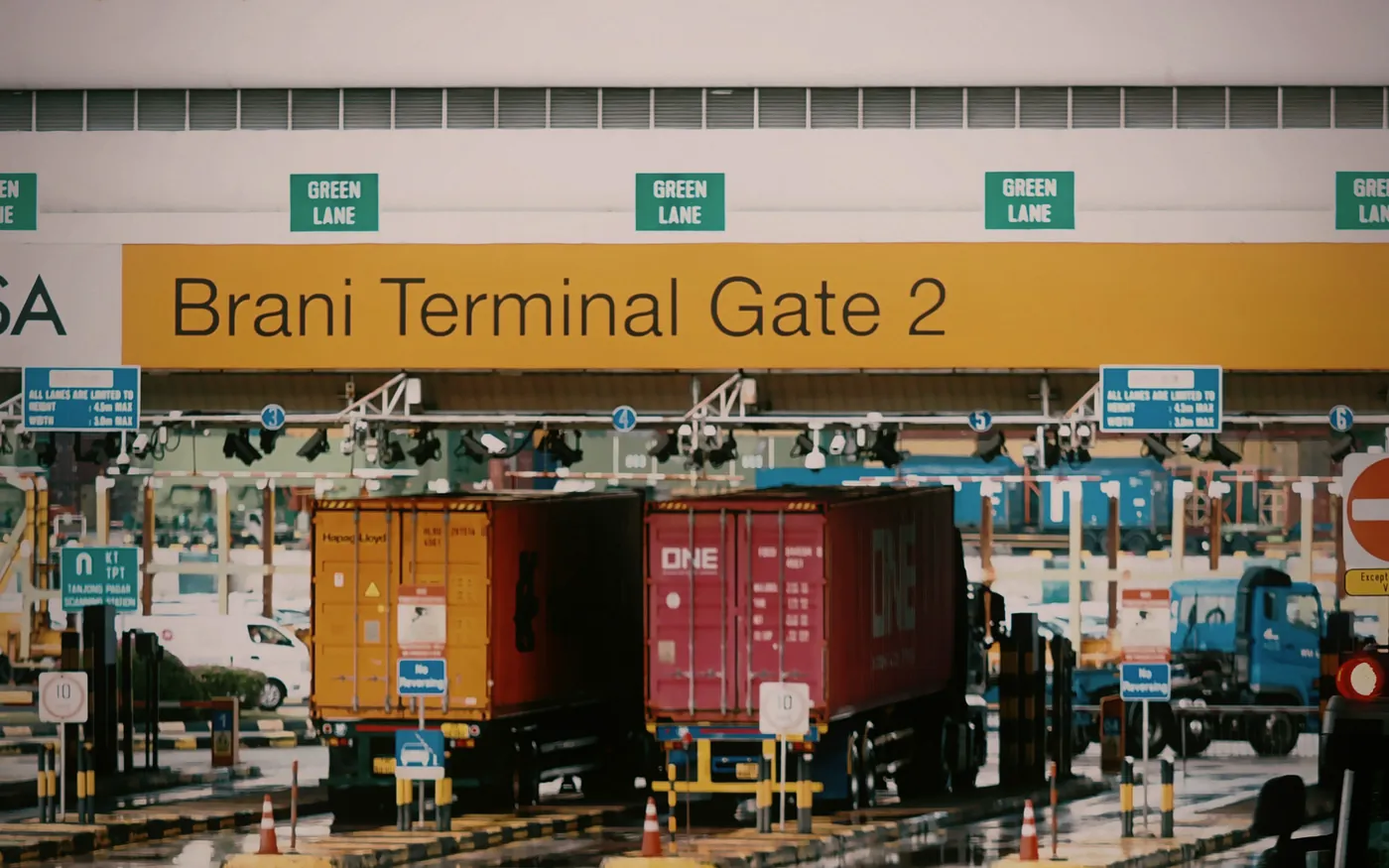
A great price negotiated with your supplier doesn't count for much if the goods sit at customs for weeks over a missing document. Here are the 8 documents we prepare in advance for every non-EU shipment (China, India, other Asian markets).
Which documents does customs require for a non-EU import?
1. Commercial invoice and packing list
They describe the goods, their value and quantities. Customs uses them to set the customs value, which also includes freight and insurance up to the EU border. That is why the invoice must match the transport documents and the agreed delivery terms.
2. Bill of Lading or Air Waybill
This is the document issued by the carrier. It proves the goods were loaded and allows them to be collected at destination. For sea freight, goods are released against the original, a telex release or a sea waybill. We agree the option with the supplier in advance.
3. Proof of origin
Two documents are often confused here:
- Proof of preferential origin (EUR.1 certificate, origin declaration on the invoice or REX statement, as applicable) gives the reduced or zero duty under the relevant agreement or arrangement. Without it, the standard duty applies.
- A non-preferential certificate of origin is generally not required for EU imports. Customs may still ask for proof of origin, especially for products under anti-dumping duties.
4. Active EORI number
Without a valid EORI number for the importer, the import declaration cannot be processed. In Romania, the application is submitted online through the EORI-RO system run by the Romanian Customs Authority.
An EORI number is mandatory. The procedure is set by Order of the President of the Romanian Customs Authority no. 1760/2023; the application goes to the regional customs directorate, not to ANAF. The act sets no standard time limit for issuing the number, so apply early.
5. Import customs declaration
It declares the goods on entry into the EU, under the Union Customs Code (Reg. EU 952/2013). It is lodged by our partner broker, acting as customs representative.
6. Product conformity documents
They depend on the product:
- CE marking and the EU declaration of conformity, only for products covered by harmonisation legislation: machinery, electrical equipment, toys.
- A declaration of compliance for food contact, for tableware, cutlery and kitchen utensils. Polyamide or melamine kitchenware from China and Hong Kong also needs a laboratory report for every shipment.
- For consumer goods, the General Product Safety Regulation (GPSR) requires the name and address of the manufacturer and of the importer on the product or, where that is not possible, on the packaging.
7. Safety data sheet
It is mandatory only for hazardous substances and mixtures, such as chemicals or detergents, under REACH. Ordinary articles such as tableware do not need one. The supplier must, however, declare whether they contain substances of very high concern above 0.1%.
8. Transport contract and cargo insurance
Insurance is not mandatory. The delivery term (Incoterms) decides who takes it out: under CIF, the seller provides only minimum cover; under CIP, extended cover. For fragile or high-value goods we recommend extended cover, arranged separately if needed.
The exception: sourcing within the EU
There are no customs for purchases within the EU, and most of the documents above do not apply. What matters is that supplier and buyer have VAT numbers valid in VIES and that there is proof of transport between countries.
How is the origin of goods determined, and how do you prove it?
Where several countries take part in manufacture, origin is the country of the last substantial, economically justified processing or working (Union Customs Code, Art. 60(2)). Customs may ask for proof of origin and for additional information (Art. 61(1)–(2)). Affixing marks or labels, repackaging and simple assembly of parts are not considered substantial processing and do not confer origin (Delegated Regulation (EU) 2015/2446, Art. 34). Moving the last operation to another country does not guarantee that you avoid the duty: see the aluminium foil case, below.
Who is responsible for the declaration, and how long do you keep the documents?
The person lodging the declaration is responsible (Art. 15(2)). Customs may check the declaration after the goods have been released (Art. 48). Documents are kept for at least three years (Art. 51(1)).
What do you check before ordering?
- The customs code and the duty in TARIC, by country of origin. For porcelain and ceramics from China, see Where to import porcelain from after the 79% duty on China?
- Aluminium foil. Two regulations concern aluminium foil from China, on different products:
- Reg. (EU) 2025/1720, for aluminium foil of CN codes ex 7607 11 11 and ex 7607 19 10: 14.2% and 15.6% for named companies, 14.6% for ten cooperating companies, 35.6% for all others. The individual rate applies only with a valid commercial invoice. The 35.6% rate is extended to foil consigned from Thailand (Art. 1(3)).
- Reg. (EU) 2022/402, for rolls of more than 10 kg and a width of up to 650 mm: between 6.4% and 30.0%. The measure is extended to foil consigned from Thailand (Art. 1(5); original extension: Reg. (EU) 2021/1474).
- Steel household articles (heading 7323): Heading 7323 is listed in Annex XVII to Reg. (EU) 833/2014. It is prohibited to import Annex XVII products processed in a third country from Russian-origin steel listed in the same annex (Art. 3g(1)(d), from 30 September 2023). At import, the importer provides evidence of the country of origin of the steel used in the processing; imports from the partner countries in Annex XXXVI are exempt. The regulation does not specify the form of the proof.
FAQ
Do I need a certificate of origin for an import from China?
Usually not, but customs may ask for proof of origin, especially for products under anti-dumping duties.
Where do I get an EORI number?
From the Romanian Customs Authority, through the EORI-RO system, not from ANAF.
How long do I keep import documents?
At least three years.
Tips from our practice
- We check the code and the duties in TARIC before asking for the final quote.
- We calculate the price with the duty included, not the factory price.
- For heading 7323 we ask for proof of the steel’s origin together with the quote: for example, the steelworks’ certificate; confirm the form with your customs broker.
- We keep the import documents for at least three years, in case of a check after the goods are released (Reg. (EU) 952/2013, Arts. 48 and 51).
How we help
We prepare all the relevant documents in advance for every shipment, across any category of goods — consumer goods, machinery and equipment, complete production lines.
See the Sourcing & Logistics service details →
Sources
- (direct links to the acts): Reg. (EU) 952/2013
- Delegated Reg. (EU) 2015/2446
- Order of the Romanian Customs Authority 1760/2023
- Reg. (EU) 2025/1720
- Reg. (EU) 2022/402
- Reg. (EU) 2021/1474
- Reg. (EU) 833/2014
Related resources
- Where to import porcelain from after the 79% duty on China?
- Food contact rules: what applies to EU imports?
- Ceramic and porcelain articles: what lead and cadmium limits?
- Sourcing and logistics
Our role. Best Practices S.R.L. provides sourcing, PPWR and packaging, procurement and logistics, and ESG and Lean services, so we have a commercial interest in these subjects. This text summarises the rules in the official sources cited and is not a legal opinion (see Terms and conditions).